Verified equipment
Make a first part, not a guess
KPI LLC provides FDM printing and practical file review for Connecticut and Massachusetts projects. We’ll discuss what the part needs to do, which details are known, and what needs confirming before you commit to a material or design decision.
What is verified
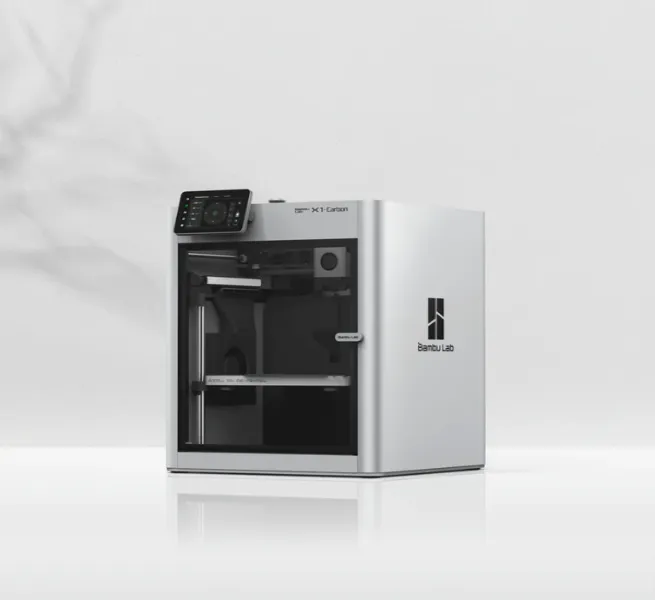
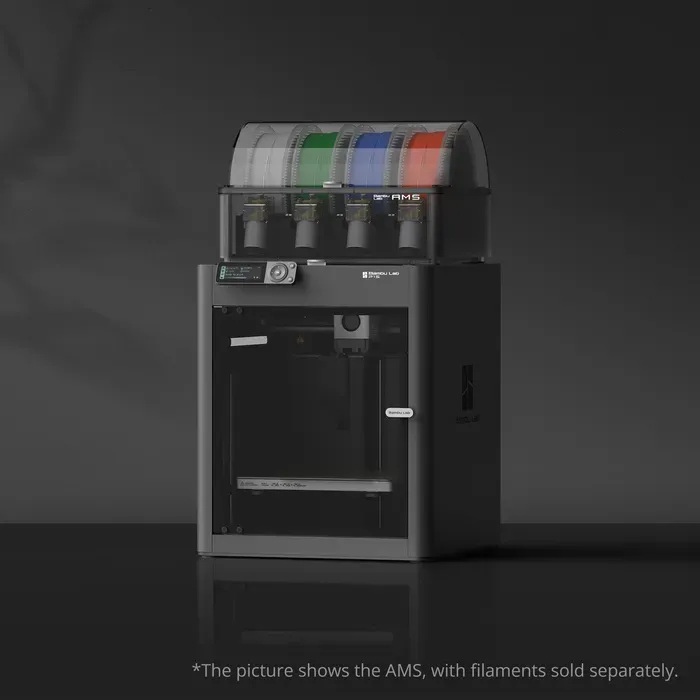
KPI's currently verified equipment is a Bambu Lab P1S and a Bambu Lab X1C. Both are used for filament-based FDM printing. The right way to use either machine depends on your model and application; the equipment names alone do not establish a guaranteed tolerance, strength, speed, temperature rating, or finish.
No resin or powder-bed printing process is listed as an available KPI service. If your part requires a different process, include that need in your request so its fit can be discussed honestly.
Material decision guide
The matrix below deliberately separates verified availability from engineering properties. Strength, flexibility, heat resistance, surface finish, and cost can vary by filament formulation and print setup. KPI has not confirmed numeric values or comparative rankings for this page; request that information for your specific design before making a selection.
| Material category | Availability | Strength | Flexibility | Heat resistance | Finish / relative cost | Best fit |
|---|---|---|---|---|---|---|
| PLA | Verified | Owner confirmation needed | Owner confirmation needed | Owner confirmation needed | Owner confirmation needed | Discuss the specific use |
| PETG | Verified | Owner confirmation needed | Owner confirmation needed | Owner confirmation needed | Owner confirmation needed | Discuss the specific use |
| Carbon-fiber-reinforced filament | Verified category; base polymer to confirm | Owner confirmation needed | Owner confirmation needed | Owner confirmation needed | Owner confirmation needed | Discuss the specific use |
| Other material | Upon request | Unverified | Unverified | Unverified | Unverified | Confirm availability first |
Matrix unknowns are intentional placeholders. Do not use this page as a material data sheet.
Design before slicing
FDM parts are built in layers. The orientation and geometry can affect how those layers meet, where supports may be needed, and which surfaces are visible. Review the model as a part with a job—not only as a shape on screen.
These are general design considerations, not guaranteed tolerances or safety advice. Exact minimum wall thickness, dimensional variation, fit clearance, and achievable detail depend on the machine setup, material, geometry, and slicer configuration. KPI has not verified numeric design limits for publication. If a dimension is important, identify it in your request and ask for confirmation or a test-fit approach.
From file to handoff
Bring the relevant requirements into the discussion. This general page does not certify parts for medical, aviation, life-safety, or regulated applications.
What we can confirm
For a useful review, include the file format, intended function, quantity, key dimensions, and location. Material preference is helpful, but it is not a specification or a promise that a material is appropriate. If there is a target date, share it so KPI can confirm feasibility rather than imply availability.
Requests are welcome from Connecticut and Massachusetts, as well as other locations. Pickup versus shipping is recorded as a preference; delivery details and any shipping arrangements require confirmation after the inquiry. KPI does not publish unverified office addresses or drop-in directions.
The secure quote form accepts STL, OBJ, STEP/STP, and 3MF files, with at most five attachments and a combined 100 MB maximum. A quote inquiry is not an order and does not commit either party to a material, price, or schedule.
Read how project review works →Ask about the exact material grade and application. Current confirmed availability is PLA, PETG, and carbon-fiber-reinforced filament, with more by request.
Service area: Connecticut and Massachusetts. No street location or operating hours are published because those details are unverified.
Ask a material questionStraight answers
KPI's verified offering is FDM 3D printing using Bambu Lab P1S and X1C printers. SLA/resin, SLS, MJF, and other processes are not represented as current services.
PLA, PETG, and carbon-fiber-reinforced filament are verified material categories. Other materials may be available upon request; confirm the exact product and suitability with KPI.
Those values depend on the exact filament, print settings, geometry, orientation, and intended use. KPI has not published verified numeric specifications here. Share the application and ask for confirmation before designing around a performance value.
Timing and price depend on the file, material, quantity, review needs, and fulfillment. Submit a request for a project-specific response; no unverified price or turnaround estimate is promised.
STL, OBJ, STEP/STP, and 3MF files are accepted on the quote form. You may attach up to five files with a combined limit of 100 MB.
Request a conversation
Share the context you have. Exact materials, cost, fit, and timing are confirmed after review—nothing here assumes a specification you haven’t provided.